Theatre
Learn to Hold a Room
Theatre is the quickest cure for hesitation. Children learn to speak up, teenagers learn to inhabit a character, and adults rediscover a voice they'd stopped using.
The Curriculum
From Warm-Up Games to Full Scenes
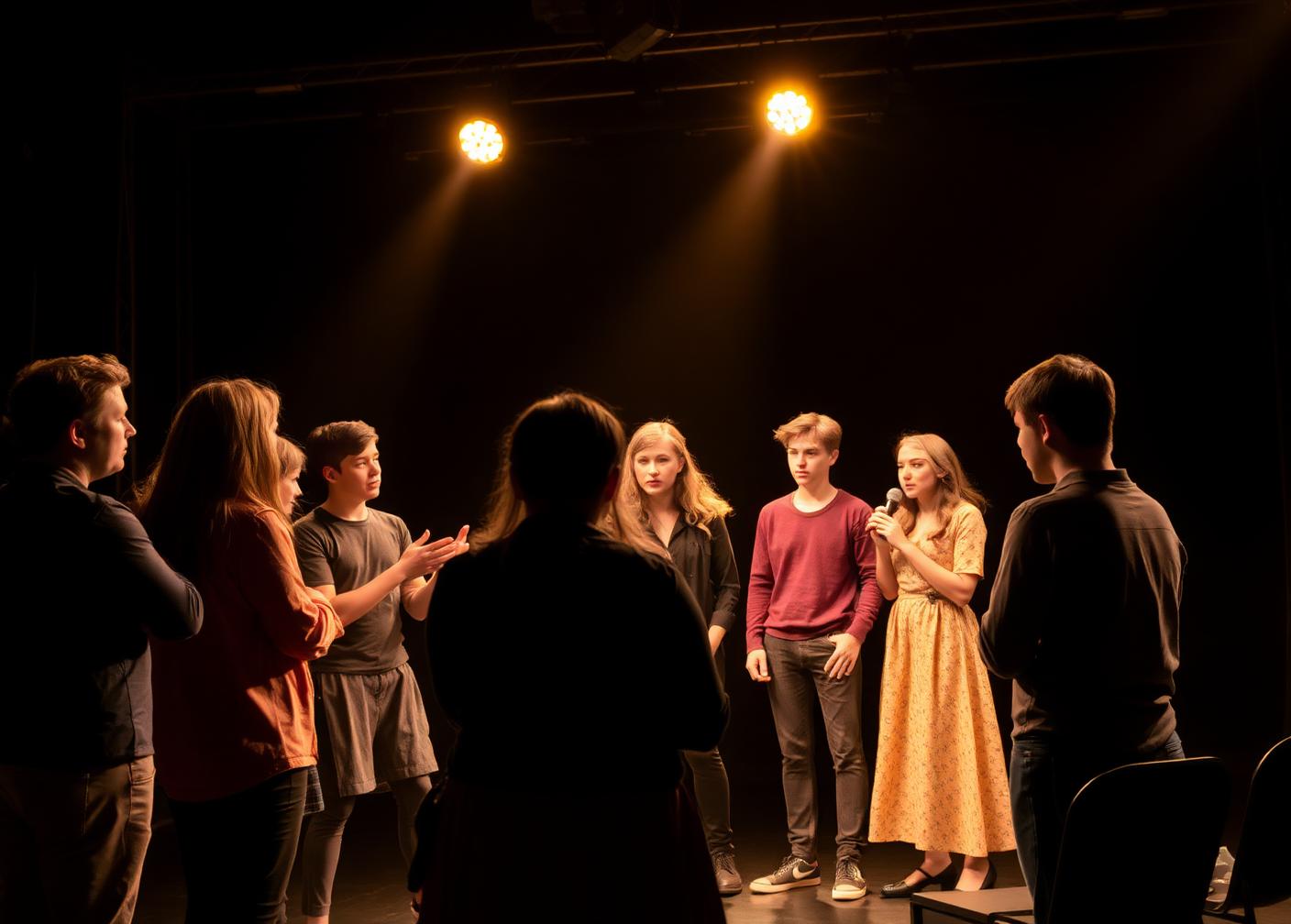
Sessions are physical, playful and structured — nobody sits reading a script for an hour.
- 01
Improvisation
Think on your feet, say yes, and stop editing yourself mid-sentence. The most useful skill we teach.
- 02
Scene & Script Work
Text analysis, character intention and monologue preparation for auditions and productions.
- 03
Voice & Diction
Projection, clarity, pace and breath — so the last row hears every word without strain.
- 04
Ensemble & Stagecraft
Blocking, timing, listening and the discipline of making a scene work with other people.
Why Parents Choose Theatre
Within a term, most children start volunteering answers in class, reading aloud without flinching and handling stage presentations calmly. Teachers notice before parents do.
For teenagers, theatre becomes a place to test out ideas and emotions safely — and a serious craft for anyone considering film, media or public speaking.
Adults join for presence: interviews, presentations and simply being heard clearly in a loud room.
- Kids 6+
- Teen ensemble
- Adult evening batch
- Audition coaching
- Annual production
Step Into Your First Scene
Sit in on a trial workshop and watch how quickly a room of strangers becomes an ensemble.